
 PT
PT EN
EN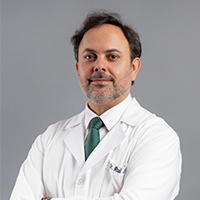
Rui Claro
Orthopedist
Evaluation of the surgical treatment of proximal humerus fractures in a geriatric population
What is the main focus of your research?
Proximal humerus fractures (PHFs) are fragility fractures that are common in elderly patients and result from low-energy trauma mechanisms.
Currently, 67-85% of PHFs are treated non-surgically. However, complex fractures typically require surgical treatment.
We evaluated patients aged 70 years or older with acute PHFs with displacement who were treated surgically and determined implant survival, mortality, and morbidity rates, associated complications, revision rates, and functional and radiologic outcomes. We also evaluated the impact of a specific reverse total shoulder arthroplasty (RTSA) design for fractures compared to a standard RTSA humeral stem on improving function and procedural safety taking into account different methods of tuberosity fixation.
What are the key findings of the study?
Analysis of the study data indicates that it is advisable to prioritize the use of RTSA with a specific humeral stem for fractures, with a "window" for bone integration. In addition, if feasible, the implementation of a robust tuberosity fixation technique should be considered. This combined approach appears to offer the best option for reducing the risk of tuberosity nonunion, migration, or even pseudarthrosis, which is particularly important in this age group.
The use of RTSA as primary treatment for displaced PHFs in the geriatric population allowed 73.2% of patients to resume activities of daily living and almost half of patients (45.5%) to achieve functional shoulder mobility.
Read the full version at: https://hdl.handle.net/10216/155974
Rui Claro is a consultant orthopedic surgeon.
He holds a Ph.D. in Medical Sciences with a specialization in Shoulder Pathology.
He is currently the coordinator of the Shoulder Group of the Orthopedic Department of Centro Hospitalar Universitário de Santo António. In addition, he actively contributes as a member of the Registration Committee of the European Society of Shoulder and Elbow Surgery (SECEC-ESSSE) and of the Teaching Center of SECEC-ESSSE (2021-2025).
His main clinical and research interests include shoulder surgery, arthroplasty, arthroscopy, orthobiologics, tissue engineering, and robotics.
His leadership roles include serving as President of the Portuguese Society of Shoulder and Elbow from 2020 to 2022, as well as National Delegate for SECEC-ESSSE in 2022.